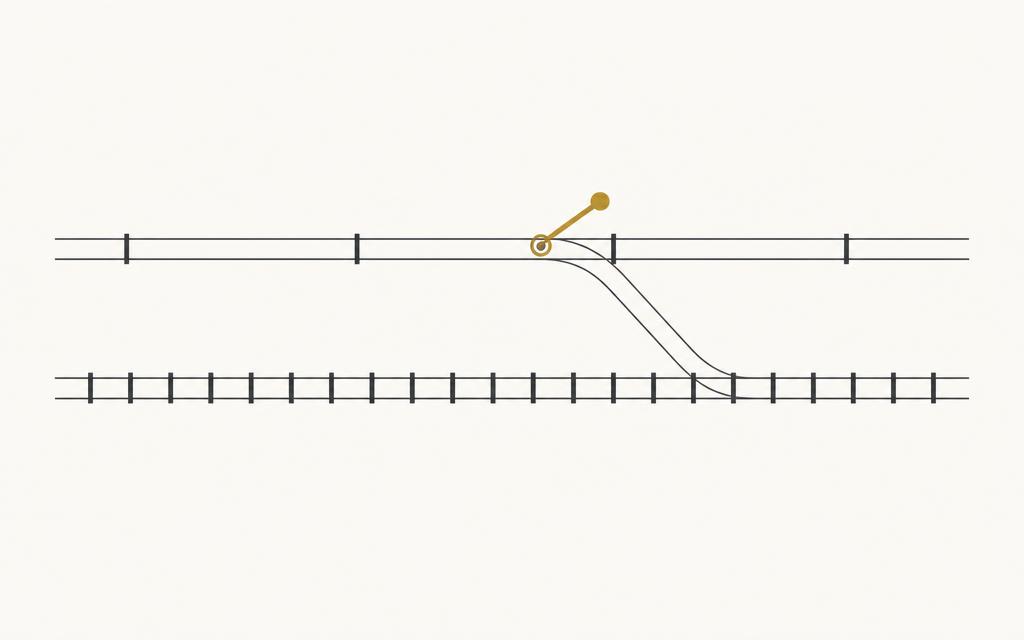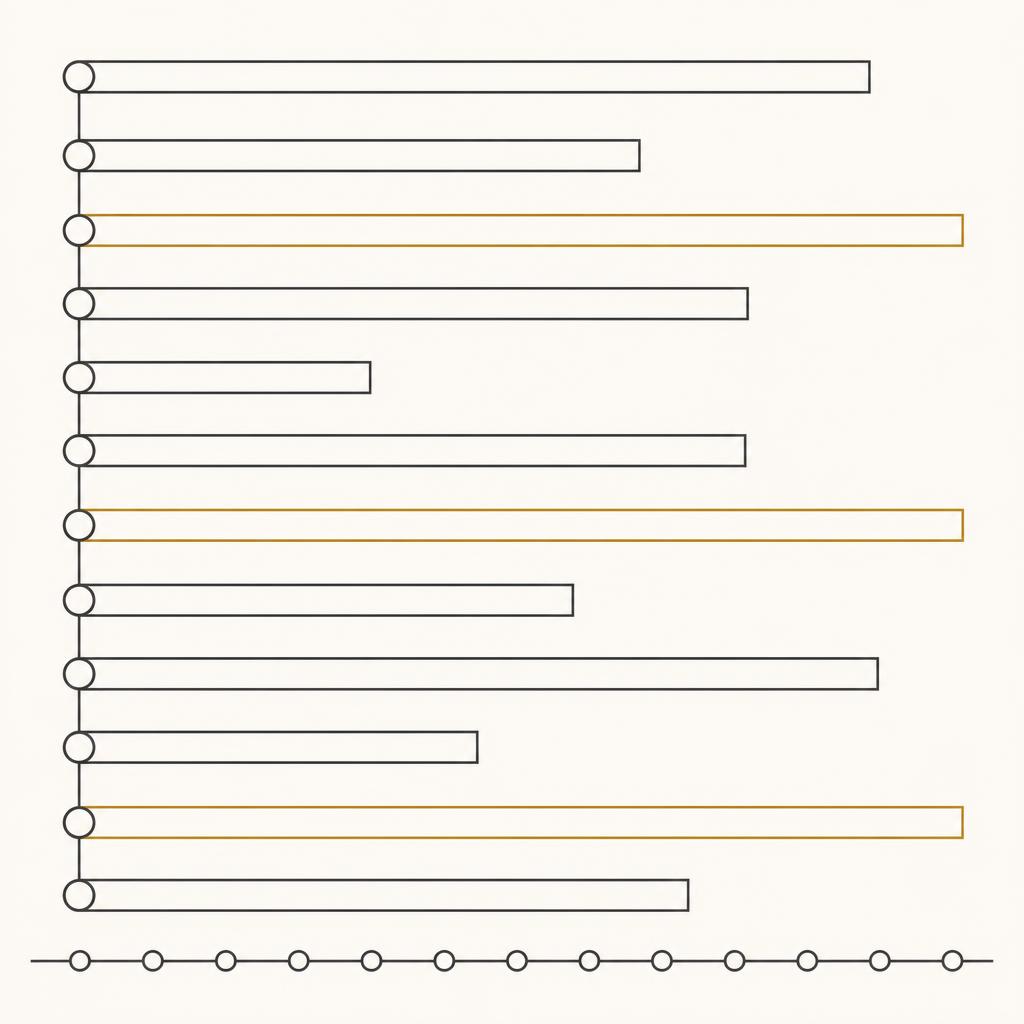
Most vendor risk frameworks treat filing as binary: the return was filed, or it was not. That framing throws away the majority of the information available. Filing behaviour is a rhythm, and rhythms degrade before they stop. A supplier who filed on the 9th every month for two years and now files on the 18th has told you something real, even though every return in that history is technically filed.
Three cadence signals worth tracking
Drift. Measure the gap between the statutory due date and the actual filing date, month over month. A stable supplier has a tight distribution — usually two to four days. Widening drift is the earliest signal in the set and often precedes a missed return by two to three cycles. It typically reflects cash-flow strain or the loss of an accounts person, both of which matter to you as a buyer.
The GSTR-1 to GSTR-3B gap. GSTR-1 reports outward supplies; GSTR-3B carries the payment. A supplier who continues filing GSTR-1 punctually while GSTR-3B slips is telling you that the invoices exist and the tax is not being paid. This is the most commercially significant pattern in the whole dataset, because your credit under Section 16(2)(c) depends on the tax reaching the government. Your GSTR-2B will look fine. Your position will not be.
Filing frequency changes. A move between monthly and quarterly (QRMP) reporting is legitimate, but it changes when data reaches your 2B and therefore when you can claim. Unannounced switches are a frequent cause of "missing" credit that is not missing at all — it is simply arriving on a quarterly rhythm your reconciliation did not expect.
Setting thresholds you will actually act on
A signal that does not trigger an action is a report, not a control. Useful thresholds are conservative and few:
- One late filing: note it. No action.
- Two consecutive late filings: flag the vendor to the category owner and check whether the invoices for those periods appear in 2B.
- Three consecutive late filings, or any GSTR-3B non-filing: move the vendor to review. Hold the tax component on open invoices. Require an explanation before the next purchase order.
- Two consecutive GSTR-3B non-filings: treat as high risk. This is the profile from which registration suspension usually follows.
The exact numbers matter less than the fact that they are fixed in advance. Teams that decide thresholds case by case reliably decide in favour of the vendor they need shipment from this week.
Cadence in the context of your own claim cycle
Filing signals are only useful if they arrive before your claim. If your team reconciles 2B on the 20th and claims on the 20th, a signal that surfaces on the 22nd is documentation, not protection. Pull the vendor cadence review forward to the point where procurement decisions are still open — typically the first week of the month for the previous period.
This is also why an annual vendor review is close to worthless for this purpose. Compliance behaviour changes on a monthly clock. A control operating on a yearly clock cannot see it.
Distinguishing noise from signal
Not every late filing is meaningful. Portal outages near due dates, genuine one-off disruptions, and the first cycle after a frequency change all produce late filings that carry no information about the supplier's health. Two habits help:
- Compare across your own portfolio. If forty vendors filed late in the same window, the cause is systemic, not supplier-specific.
- Look at the trend, not the point. One outlier against a clean two-year history is noise. An outlier against a slowly widening drift is confirmation.
What to record
For each vendor, keep the last twelve periods with: due date, actual filing date, return type, and whether the invoices appeared in your 2B for that period. That table is small, cheap to maintain automatically, and answers almost every question an auditor or a finance head will ask about why you continued to buy from a particular supplier.
The point of cadence analysis is not to predict defaults with precision. It is to make sure that when a supplier does default, it was not a surprise and your exposure was already capped.
Indicative GST compliance and ITC risk information based on GSTN-reported data. Not a government portal, credit rating, legal opinion, professional advice or guarantee of ITC availability.
Check a vendor GSTIN now
Registration status, filing history and an indicative ITC risk score for any GSTIN. Unlimited manual search on Free.
Create a free account